Tailor-made holidays in Alpe d’Huez
South-facing slopes, a summit at 3,330 m and one of the longest runs in the world. Tell us your dates, your group and your level, and we will build your Alpe d’Huez stay.
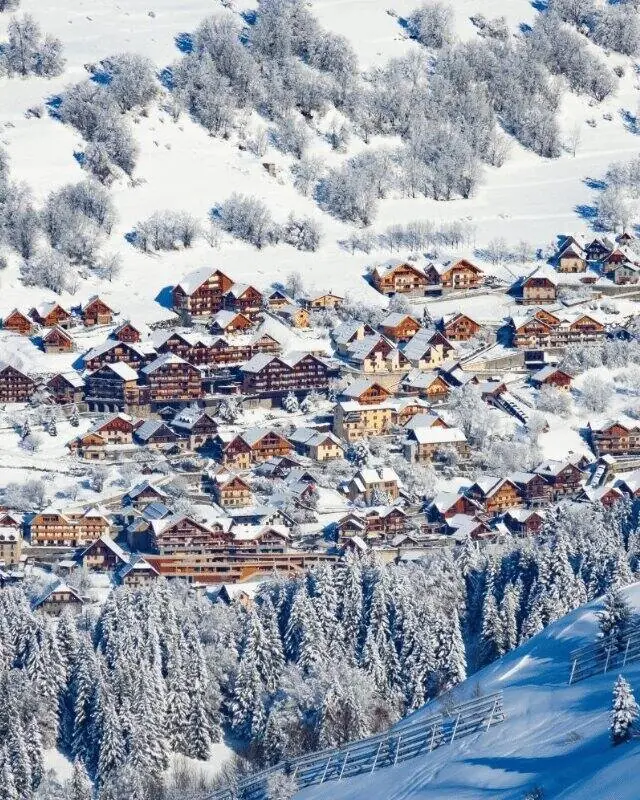
Alpe d’Huez & the Oisans
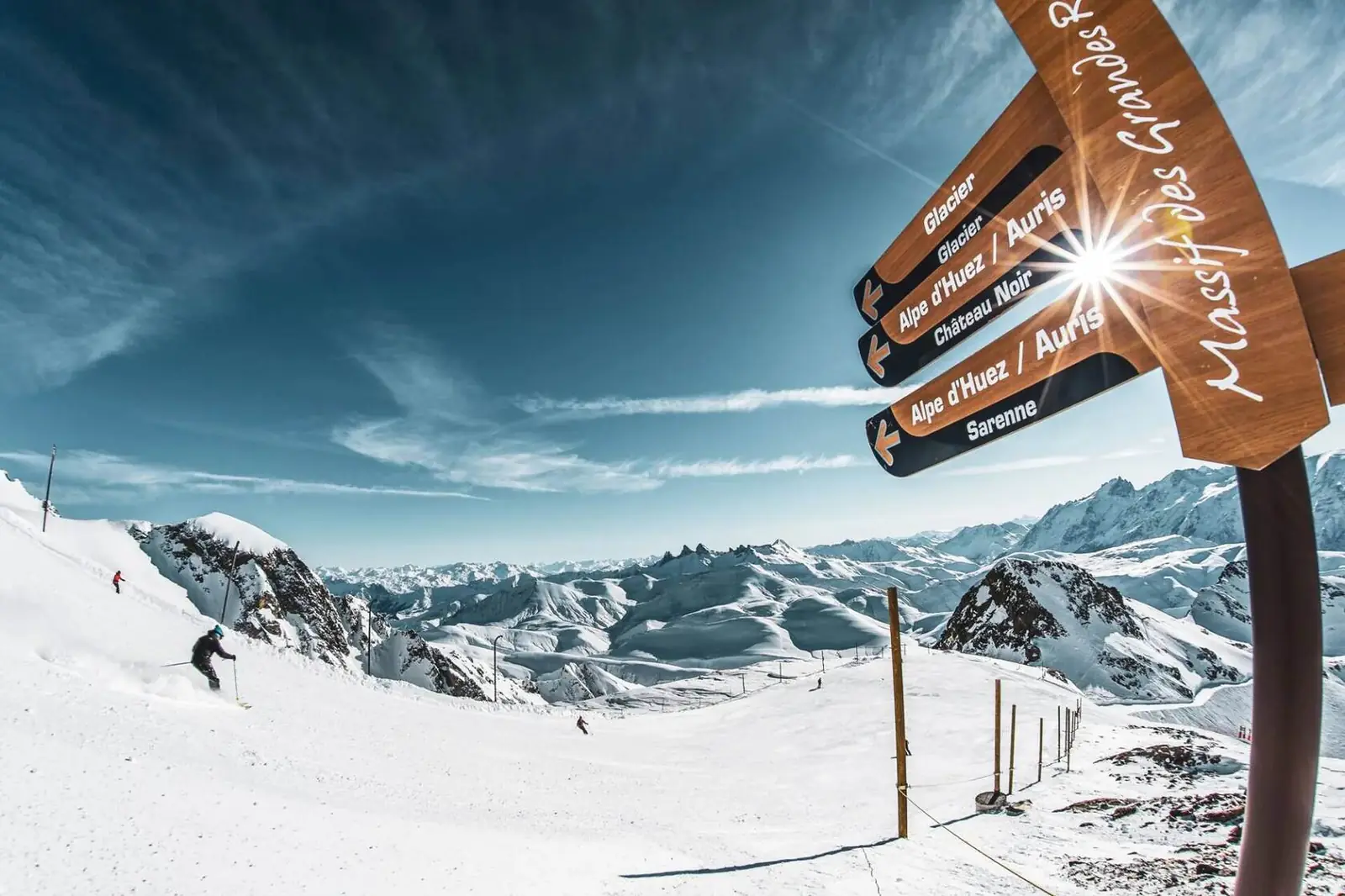
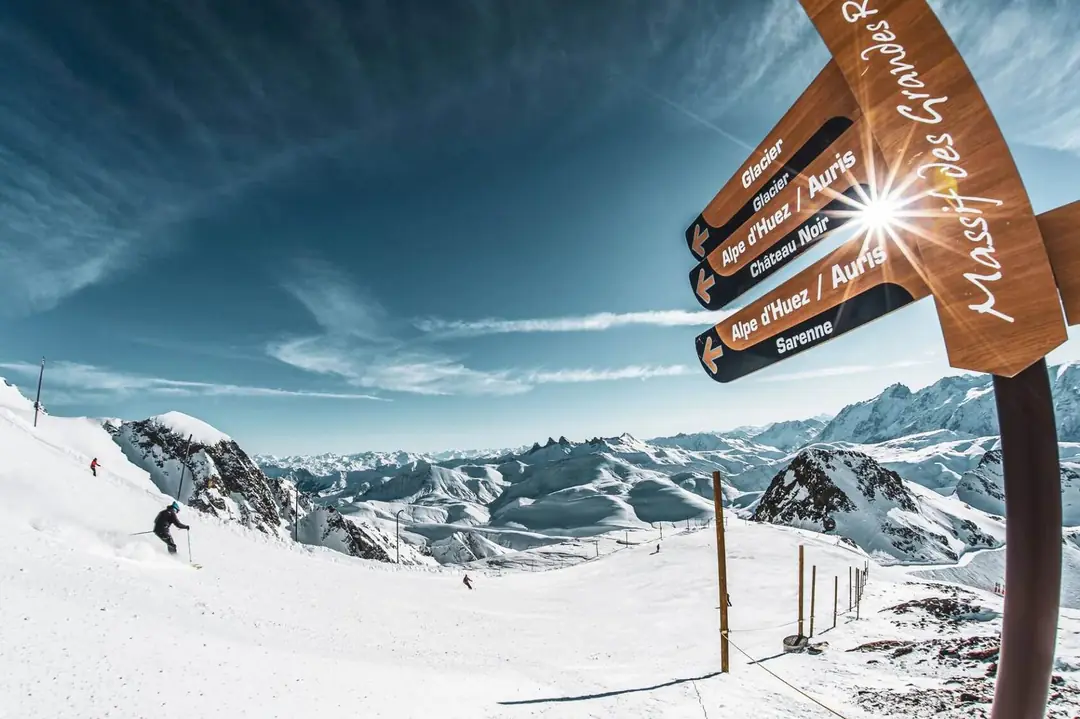
At 1,860 m and facing south, Alpe d’Huez is known as the island in the sun. From the Pic Blanc at 3,330 m, the Sarenne run descends 16 km, one of the longest in the world.
Around an hour from Grenoble, it offers a vast ski area of 250 km, a lively village and accommodation for every budget. We match the right stay to your group.
Plan my stayWhat could your Alpe d’Huez holiday look like?
Skiing
A vast, sunny ski area for every level, from gentle village slopes to high-mountain runs.
The Sarenne
16 km from the Pic Blanc to the valley: a bucket-list descent for confident skiers.
Family & experiences
Ski schools, kids’ clubs, an ice rink and wide beginner areas close to the village.
Sun & après-ski
Terraces in the sun, lively bars and restaurants with views over the Oisans.
Alpe d’Huez: everything to know before you book
Skiing and snowboarding in Alpe d’Huez
Alpe d’Huez sits on a south-facing plateau at 1,860 m in the Grandes Rousses massif, and the resort promotes around 300 days of sunshine a year, hence its nickname, the island in the sun. The Alpe d’Huez Grand Domaine links five resorts and two villages, with about 250 km of pistes and a top point at the Pic Blanc, 3,330 m.
The signature run is the Sarenne, a black piste that descends 16 km from the Pic Blanc to the Sarenne gorge, presented by the resort as the longest black run in Europe. Despite its grade, much of it is long and rolling rather than steep, so confident intermediates manage it in good conditions. Elsewhere you will find wide, sunny cruising above the resort, steeper terrain under the Pic Blanc, wooded runs down to Vaujany, Oz and Villard-Reculas for snowy or flat-light days, and snowparks for freestylers.
Alpe d’Huez for families and beginners
Alpe d’Huez works very well for first-timers. The Les Bergers nursery area, right by the village, has nursery lifts and a low-speed zone, and the DMC beginner area higher up adds a magic carpet, a beginner snowpark and a sledging track. Across the Grand Domaine there are 34 green and 31 blue runs, so progression is easy, and a dedicated beginner pass covers the nursery lifts.
Three ski schools teach in the resort: the ESF, ESI Alpe d’Huez and EasySki, with lessons from age 2 and kids’ clubs and play areas. Free urban lifts, the Télécentre and the Alpe Express and Huez Express gondolas, plus free shuttle buses, make getting around with children much easier.
Where to stay in Alpe d’Huez
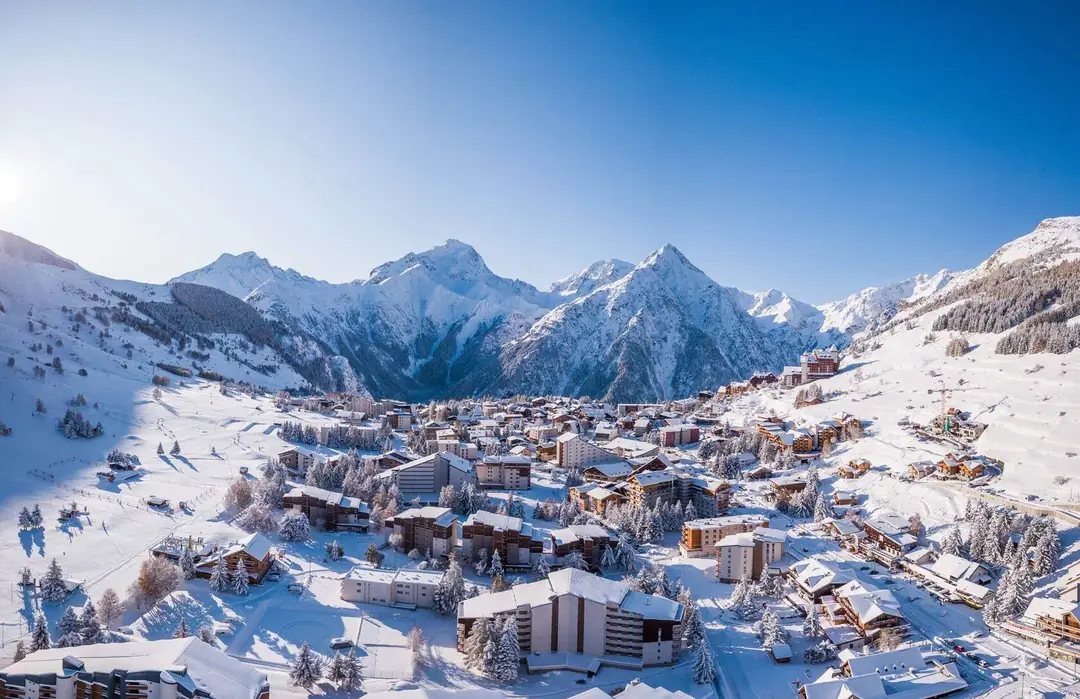
The main resort spreads across the plateau in several districts. Staying near Les Bergers puts you next to the beginner slopes and the main lifts, the area around Place Paganon and the Avenue des Jeux is the liveliest for shops and restaurants, and the Vieil Alpe district has a more traditional feel. Accommodation is a mix of apartments, residences, chalets and hotels.
For a calmer stay, the linked resorts are worth a look: Vaujany (1,250 m) and Oz-en-Oisans (1,350 m) have lifts straight up into the ski area, Auris-en-Oisans (1,600 m) is quiet and family-oriented among pine forests, and Villard-Reculas (1,500 m) is a small, authentic village.
Getting to Alpe d’Huez
Alpe d’Huez is one of the most accessible big resorts in the French Alps. From Grenoble the drive takes about an hour, and Grenoble Alpes Isère airport, about 100 km away, is roughly 1h30 by road. From Lyon allow about 2h to 2h30, and from Geneva about 2h45 to 3h30. All times depend on traffic, snow and Saturday changeovers.
The nearest railway station is Grenoble, linked to the resort by regular buses via Le Bourg-d’Oisans. The final climb is the famous road of 21 numbered hairpin bends, so winter tyres or snow chains are essential.
Beyond the slopes in Alpe d’Huez
The Palais des Sports has an indoor swimming pool with a paddling area, indoor tennis, squash and a gym, and the resort centre also has an outdoor pool and an open-air ice rink on the Avenue des Jeux. There is also sledging, an indoor children’s play area, and plenty of sunny terraces and bars for après-ski. The resort hosts an International Comedy Film Festival in January and the Tomorrowland Winter music festival in March.
In summer, cyclists come to ride the 21 hairpins made famous by the Tour de France. The lifts serve 36 signposted mountain bike routes, and there is hiking to mountain lakes such as the Lac Blanc and a 9-hole compact golf course at 1,810 m.
When to go to Alpe d’Huez
The ski season usually runs from early December to late April. January is good value with fewer crowds outside the French holidays, while February is the busiest month. Because the slopes face south, spring snow softens early in the day, so in March and April it pays to ski the higher runs in the morning and enjoy the terraces in the afternoon.
High pistes up to 3,330 m keep the top of the ski area reliable through the season. In summer, the lift-served season is the time for cycling, mountain biking and hiking; check the official dates for your year.
Your Alpe d’Huez holiday with AlpAway
We build Alpe d’Huez holidays around how you like to ski: the right district or linked village, passes, equipment hire, lessons for the children and transfers from Grenoble, Lyon or Geneva. If you want higher, glacier skiing nearby, we can also compare it with Les 2 Alpes. Send us a request with your dates and group, and we will prepare a tailored proposal.
Your questions about Alpe d’Huez
Is Alpe d’Huez good for families?
Yes. There are free nursery lifts at Les Bergers, a second beginner area at DMC, three ski schools teaching children from age 2, and free lifts and shuttles around the resort. The sunny plateau, pools and ice rink also give children plenty to do off the slopes.
Is Alpe d’Huez good for beginners?
It is one of the better big resorts for beginners. The Grand Domaine has 34 green and 31 blue runs, free drag lifts at Les Bergers, a low-speed zone and a dedicated beginner pass, so you can progress without paying for the full area.
How long is the Sarenne run?
The Sarenne descends 16 km from the Pic Blanc at 3,330 m to the Sarenne gorge. The resort presents it as the longest black run in Europe. It is long rather than relentlessly steep, so confident intermediates can tackle it in good conditions.
How do you get to Alpe d’Huez from Geneva or Lyon?
By road, allow about 2h45 to 3h30 from Geneva and about 2h to 2h30 from Lyon, depending on traffic and snow. Grenoble airport is closer, at about 1h30. The nearest train station is Grenoble, with buses to the resort.
Which village should I choose in Alpe d’Huez?
Stay in Alpe d’Huez itself for the widest choice of restaurants, shops and lifts, ideally near Les Bergers with beginners. Vaujany and Oz-en-Oisans are quieter with quick lift links up, while Auris-en-Oisans and Villard-Reculas suit families looking for a calm, village feel.
Is there a swimming pool in Alpe d’Huez?
Yes. The Palais des Sports has an indoor pool with a paddling area, and the neighbouring Île aux Loisirs has an outdoor pool and an ice rink.
Is Alpe d’Huez a good summer destination?
Yes. It is famous for the 21-hairpin road climb of the Tour de France, and also offers 36 signposted mountain bike routes, hiking to mountain lakes, a compact golf course and the pools and sports facilities in the resort.
Alpe d’Huez in summer.
In summer, cyclists from around the world climb its 21 legendary hairpins, made famous by the Tour de France. Mountain biking, golf, hiking and mountain lakes complete the picture.
Your Alpe d’Huez holiday, designed around you.
Share your dates, your group and your wishes. We reply with a free, personalised proposal.